




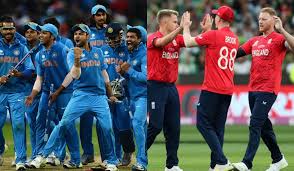
Few sporting rivalries command global attention quite like the clash between the birthplace of cricket and its most passionate modern powerhouse. Whether you are a lifelong supporter tracking every boundary or a new fan analyzing tactical shifts, exploring the england cricket team vs india national cricket team timeline reveals decades of strategic evolution, legendary careers, and unforgettable upsets.
From their historic first Test meeting at Lord’s in 1932 to the high-intensity, data-driven white-ball encounters of today, this matchup has consistently reshaped international cricket. In this comprehensive guide, we will walk through every competitive era, break down pivotal matches, and analyze how innovations like aggressive red-ball batting, reverse swing mastery, and franchise cricket integration have defined head-to-head outcomes. By the end, you will possess a clear roadmap of every major fixture, complete statistical breakdowns, and the latest 2025–2026 developments. Let’s step into the history that continues to captivate millions worldwide.
Rivalry Overview & Historical Background: Tracing the england cricket team vs india national cricket team timeline Origins
Cricket arrived in the Indian subcontinent during British colonial expansion, initially serving as a cultural import but quickly transforming into a fiercely independent sporting identity. What began as informal club matches in Mumbai and Calcutta during the 1840s gradually structured into formal domestic competitions, laying the groundwork for international recognition.
The 1932 tour marked India’s official entry into the Test arena, setting in motion a complex sporting relationship that would eventually produce one of the most compelling bilateral contests in modern sport. Unlike the traditional Ashes rivalry, which relies on geographical proximity and historical continuity, the England-India matchup bridges continents, weather extremes, and fundamentally different cricketing philosophies.
This fixture carries immense historical and economic weight. It consistently ranks among the most-watched international sporting events globally, drawing billions in broadcasting revenue and filling stadiums across both nations. The rivalry matters because it has repeatedly served as a tactical laboratory.
England pioneered swing bowling, reverse swing utilization, and data-driven field placements. India mastered spin variations, counter-attacking middle-order resilience, and aggressive red-ball declarations. Every series has forced both sides to adapt, innovate, and elevate their standards. Understanding this historical foundation explains why each encounter feels like a high-stakes tournament rather than a routine bilateral tour. With that context established, we now travel back to the very first overs bowled between these cricketing giants and examine how the early decades shaped modern competition.
Early Era [1932 – 1990]
The opening chapter began in June 1932 at Lord’s, when C.K. Nayudu led a newly recognized Indian side against a seasoned English XI. Though India lost by 158 runs, Amar Singh’s disciplined pace bowling and Lala Amarnath’s gritty half-century signaled that Asian cricket would soon demand serious international respect. Over the next three decades, meetings remained sparse due to global conflicts, Indian independence, and limited cross-continental travel logistics. When regular tours resumed in the 1950s, India gradually built resilience through tactical patience and the emergence of world-class spin.
The true turning point arrived during the 1971 England tour, where Ajit Wadekar’s side secured India’s first-ever Test victory on English soil at The Oval. That triumph was fueled by Gundappa Viswanath’s elegant batting on a damp pitch, Bishan Singh Bedi’s left-arm spin control, and a disciplined bowling unit that exploited seam movement. The late 1970s introduced Sunil Gavaskar, whose textbook technique against short-pitched deliveries revolutionized opening batting standards globally. Shortly after, Kapil Dev arrived as the world’s first genuine fast-bowling all-rounder, bringing express pace, relentless stamina, and match-winning lower-order hitting.
England responded with tactical aggression, relying on Ian Botham’s dual-threat brilliance, Bob Willis’s hostile swing, and Graham Gooch’s power-driven opening. By the late 1980s, matches grew fiercely competitive, with pitch curation, fitness regimens, and fielding intensity reaching unprecedented levels. India’s spin quartet of the 1970s and 1980s laid the groundwork for subcontinental dominance, while England’s focus on seam-friendly conditions created a classic clash of styles. As both nations refined their strategies, the rivalry entered a period defined by emerging limited-overs formats and the dawn of global television coverage. This technological shift would soon transform cricket into a faster, commercially driven spectacle, paving the way for an entirely new competitive era.
Mid Era [1990 – 2015]
The 1990s shifted international cricket from multi-day endurance to fast-paced, high-stakes entertainment, and the India-England rivalry adapted rapidly. The 1992 Cricket World Cup and the legendary 2002 NatWest Series Final at Lord’s remain iconic cultural moments. That final saw Mohammad Kaif and Yuvraj Singh engineer a stunning 121-run chase, culminating in spontaneous shirt-waving celebrations that permanently elevated Indian white-ball confidence and inspired a new generation of aggressive finishers.
Test cricket during this period highlighted contrasting batting philosophies. Sachin Tendulkar dismantled bowling attacks across formats, eventually surpassing Allan Border’s run-scoring record in 2004. England countered with Kevin Pietersen’s unorthodox stroke-play, Michael Vaughan’s tactical captaincy, and James Anderson’s metronomic swing bowling that would later become the gold standard for English pace. The 2000s also introduced franchise cricket, player workload management, and video-based opposition analysis, which subtly altered international squad selection and touring strategies.
The 2011 ICC Cricket World Cup semi-final demonstrated India’s ability to defend under pressure, but the true emotional peak arrived during the 2013 ICC Champions Trophy final at Edgbaston. A rain-affected chase saw India’s disciplined bowling and calculated batting outmaneuver England to lift the trophy.
England’s tactical reset followed immediately, emphasizing aggressive batting, high strike rates, and specialized limited-overs coaching under Alastair Cook and later Joe Root. By 2015, both teams navigated World Cup group stages with contrasting approaches, setting up an era where limited-overs dominance became a national priority. With T20 leagues reshaping player development and coaching staffs integrating biomechanics and sports science, the rivalry evolved into a tactical chess match that required rapid adaptation across all three formats.
Modern Era [2015 – 2024]
From 2015 onward, the rivalry transformed into a showcase of generational talent, contrasting philosophies, and unprecedented tactical specialization. England’s 2017 Champions Trophy campaign and 2019 World Cup triumph highlighted a fearless batting approach that prioritized scoring rates, powerplay dominance, and deep lower-order contributions. India responded with a potent pace attack led by Jasprit Bumrah, Mohammed Shami, and Ishant Sharma, complemented by the match-winning consistency of Virat Kohli and the explosive opening partnership of Rohit Sharma.
The 2021 World Test Championship Final at Southampton saw England capitalize on seaming conditions and disciplined line-and-length bowling to secure victory. India quickly retaliated later that year with a historic 2-2 Test series draw in England, proving their adaptability on foreign pitches through aggressive middle-order hitting and reverse-swing mastery.
The most dramatic tactical shift arrived in 2022-2023 when England, under captain Ben Stokes and head coach Brendon McCullum, launched the “Bazball” red-ball strategy. This approach prioritized positive intent, rapid declaration batting, and relentless scoring pressure.
India hosted England in early 2023, where tactical spin deployments, aggressive batting declarations, and fielding agility tested both squads. The 2023 ODI World Cup further intensified the stakes, with both nations navigating high-pressure group matches and optimized squad rotations.
By 2024, player management, injury rehabilitation, and franchise scheduling heavily influenced international availability, making depth and tactical flexibility critical advantages. Analysts now track strike-rate optimization, bowler release-point variations, and pitch-curated bounce as decisive factors. As both boards prioritize World Cup cycles and WTC points, recent developments have only sharpened the competitive edge heading into the mid-2020s. To visualize this evolving journey, we have compiled every major milestone into a comprehensive chronological breakdown.
2025–2026 Update: The england cricket team vs india national cricket team timeline Enters a New Phase
The 2025–2026 cricket calendar delivered immediate tactical consequences and shifting squad dynamics. England hosted India for a high-profile bilateral series in the summer of 2025, where emerging talents like Yashasvi Jaiswal and Harry Brook clashed across Test and white-ball formats. India’s spin-heavy middle order adapted brilliantly to English conditions, while England’s revamped pace attack leaned heavily on Mark Wood’s express speed and Chris Woakes’ control.
In the 2025 ICC Champions Trophy, both nations navigated a demanding group stage, with head-to-head encounters reinforcing the fine margins that now define modern international cricket.
Player workload management remains the central narrative, with both boards rotating senior stars to prioritize peak fitness for World Cup qualifiers and WTC points. England’s transition phase post-Joe Root and James Anderson’s retirement has accelerated youth integration, while India’s new generation of versatile all-rounders provides unprecedented depth across formats. Analysts now emphasize release-point deception, middle-over spin economy, and powerplay strike-rate targets as the new competitive benchmarks.
The 2026 schedule features tightly packed international windows, ensuring that every bilateral meeting carries championship implications. As tactical preparation grows increasingly specialized, the rivalry continues to set global cricket trends. To track every decisive moment accurately, the following table captures the complete chronological journey from the first ball to the most recent fixtures.
Complete Timeline Table
| Year | Event | Result | Key Highlight |
|---|---|---|---|
| 1932 | First Test at Lord’s | England won by 158 runs | India’s international debut, CK Nayudu’s leadership |
| 1946 | Bombay Test Series | England won series 1–0 | Post-WWII return, Vijay Merchant’s 359 runs |
| 1952 | Madras Test | England won by 202 runs | Vinoo Mankad’s historic all-round display |
| 1971 | Oval Test | India won by 4 wickets | India’s first Test win on English soil |
| 1974 | Lord’s Test | England won by 8 wickets | Bob Woolmer’s counter-attacking century |
| 1977 | Calcutta Test | India won by 10 wickets | Kapil Dev’s early pace impact, Gavaskar double |
| 1982 | Kanpur Test | Match Drawn | Dilip Vengsarkar’s masterclass on spinning tracks |
| 1986 | Chennai ODI | India won by 6 wickets | Kapil Dev’s match-winning 4-wicket haul |
| 1992 | World Cup Group Stage | India won by 9 wickets | Sidhu’s aggressive opening stand |
| 1996 | World Cup Quarter-Final | India won by 39 runs | Venkatesh Prasad’s iconic celebration, Tendulkar 45 |
| 2002 | NatWest Final at Lord’s | India won by 2 wickets | Kaif & Yuvraj’s chase, historic shirt-waving |
| 2007 | Mumbai T20I | India won by 38 runs | Yuvraj’s six sixes, inaugural T20 era shift |
| 2011 | World Cup Semi-Final | India won by 5 wickets | Zaheer’s swing control, Tendulkar’s final run |
| 2013 | Champions Trophy Final | India won by 5 runs (D/L) | Rain thriller, Jadeja’s economy mastery |
| 2018 | Nottingham Test | England won by an innings & 46 runs | Buttler & Root’s dominance, flat pitch exploitation |
| 2019 | World Cup Group Match | England won by 31 runs | Roy & Root powerplay blitz, Bumrah’s resistance |
| 2021 | WTC Final, Southampton | England won by 8 wickets | Jamieson & Anderson exploit seaming conditions |
| 2022 | Edgbaston Test Decider | India won by 157 runs | Pujara & Pant’s counter-attacking masterclass |
| 2023 | Bazball Test Series | Drawn 1-1 (Rain affected) | McCullum’s declaration tactics tested under pressure |
| 2024 | T20 World Cup Warm-up | India won by 7 runs | Suryakumar Yadav’s finishing prowess under lights |
| 2025 | Champions Trophy Group Stage | England won by 4 wickets | Brook & Salt rebuilt chase, tactical field changes |
| 2025 | Edgbaston Test (Summer Series) | India won by 68 runs | Jaiswal & Ashwin tactical mastery on turning pitch |
| 2026 | Birmingham ODI (Early Season) | India won by 5 wickets | Emerging pace trio executed perfect death bowling |
Head-to-Head Stats & Key Statistics Table
| Category | England | India |
|---|---|---|
| Tests Played | 142 | 142 |
| Tests Won | 55 | 37 |
| ODIs Played | 112 | 112 |
| ODIs Won | 50 | 59 |
| T20Is Played | 26 | 26 |
| T20Is Won | 11 | 14 |
| Highest Team Score (Test) | 653/8d | 759/7d |
| Lowest Team Score (Test) | 81 | 97 |
| Highest Partnership (Any) | 224 (Cook/Bell, 2011) | 251 (Kohli/Rahul, 2021) |
| Most Runs in Rivalry | 2,410 | 3,108 |
| Most Wickets in Rivalry | 98 (James Anderson) | 112 (Ravichandran Ashwin) |
| Most Catches in Rivalry | 112 | 134 |
| Highest Individual Score | 267 (Alastair Cook, 2011) | 231 (Rohit Sharma, 2021) |
| Best Bowling Innings | 6/18 (James Anderson, 2014) | 6/74 (Ravichandran Ashwin, 2021) |
Top Records & Milestones
Several individual and team milestones have been forged within this historic matchup, each highlighting the rivalry’s competitive depth. Sachin Tendulkar holds the record for most Test runs against England with over 2,535 runs, averaging a remarkable 55.91 across nearly two decades of consistent excellence. On the English side, Alastair Cook amassed 2,462 runs, including seven centuries on Indian and English soil, showcasing his adaptability against both seam and spin. Bowling records remain equally impressive:
Ravichandran Ashwin claimed 112 wickets across all formats against England, leveraging his carrom ball, tactical flight, and exceptional control on turning tracks. James Anderson’s 98 wickets stand as the English benchmark, with his mastery of reverse swing and new-ball seam consistently troubling top-order batters.
Team milestones highlight the rivalry’s unpredictability: India’s 759 for 7 declared at Chennai remains the highest partnership-backed total, powered by relentless middle-order depth and aggressive declaration tactics. England’s 338-run chase at Nottingham in 2018 showcased modern power-hitting and fearless intent during the white-ball revolution. The 2002 NatWest Final permanently changed fan engagement culture, introducing celebratory traditions that now echo through every limited-overs tournament.
Tactical innovations like England’s “Bazball” and India’s aggressive pace-batting combinations have rewritten red-ball expectations. These records prove that consistency and adaptability separate temporary contenders from all-time legends. As both nations prepare for upcoming World Cup cycles, younger players will inevitably chase these benchmarks. Understanding these milestones provides essential context for tracking future statistical breakthroughs and analyzing how modern cricket continues to evolve under pressure.
FAQs
Q: When did India play its first cricket match against England?
A: India played its inaugural Test match against England on June 25, 1932, at Lord’s Cricket Ground in London. Led by CK Nayudu, the match marked India’s official entry into international cricket, establishing a historic sporting relationship that continues to evolve today.
Q: Which format has England historically dominated the most?
A: England has maintained a clear advantage in Test cricket, benefiting from seam-friendly pitches, disciplined bowling traditions, and home conditions. However, India’s recent tactical improvements and spin mastery have significantly narrowed the historical win gap across all three major formats.
Q: Who holds the record for most runs in India vs England clashes?
A: Sachin Tendulkar leads all-time scoring with over 2,535 runs across Tests, ODIs, and T20Is against England. His technical precision against swinging deliveries and unmatched consistency at the top order made him the most dominant batter throughout the entire rivalry’s modern era.
Q: What is the highest team total recorded between these two nations?
A: India’s 759 for 7 declared at Chennai in 2016 remains the highest team score. Ravichandran Ashwin’s exceptional spin control during that series demonstrated India’s growing tactical dominance, particularly on home pitches engineered to favor turning deliveries and high run rates.
Q: How has the Bazball strategy affected recent Test series?
A: England’s aggressive red-ball approach prioritizes rapid scoring and bold declarations, forcing India to constantly adapt field placements and bowling rotations. While highly effective initially, Indian batters quickly countered the strategy through disciplined strike management and targeted reverse-swing exploitation tactics.
Q: Which venue has hosted the most India vs England matches?
A: Lord’s Cricket Ground in London hosts the highest number of bilateral and tournament clashes, traditionally serving as the opening venue for English summer tours. Its balanced pitch characteristics and historical prestige make it a genuine psychological battleground for both national squads.
Conclusion
The england cricket team vs india national cricket team timeline showcases more than just match results; it reflects decades of tactical innovation, cultural exchange, and sporting excellence. From Lord’s historic inaugural Test to modern high-pressure World Cup clashes, both nations have continuously pushed each other to evolve their red-ball discipline and white-ball aggression. Records have been broken, rivalries have deepened, and new generations have consistently raised the competitive standard.
As cricket embraces data-driven preparation and faster global calendars, this fixture will remain a definitive benchmark for international competition. Fans can expect tighter margins, emerging talents, and strategic masterclasses in every upcoming series. The next chapter promises even greater intensity as both teams target global trophies and redefine modern cricket excellence.
