


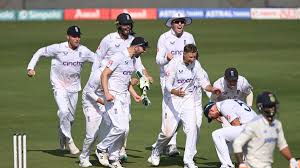
Cricket is more than just a game between two nations. It is a centuries-old rivalry built on tradition, tactical evolution, and unforgettable on-field drama. The india national cricket team vs england cricket team timeline stretches back nearly a century, capturing the rise of a cricketing superpower against the founding father of the sport. From muddy pitches at Lord’s to packed stadiums in Mumbai, every chapter has rewritten how we watch, play, and analyze cricket. Whether you are a stats enthusiast, a casual fan, or a historian, tracking this rivalry reveals how the game transformed across formats, leadership styles, and generations.
In this guide, we break down every major phase, record, and modern update. You will see exactly how matches shifted, which players defined eras, and why this india national cricket team vs england cricket team timeline remains one of the most studied in international cricket. By the end, you will understand not just the scores, but the stories behind them.
Origins & Background
The rivalry did not start on television or social media. It began during British colonial rule, when cricket was introduced to the Indian subcontinent as a symbol of imperial order. What began as an elite pastime for colonial officers quickly transformed into a unifying sport for Indian society. The first official Test match between the two sides took place in 1932, but the true meaning of the contest was about identity, pride, and sporting equality. England represented the founders of modern cricket, while India carried the hopes of millions seeking recognition on a global stage.
Why does this timeline still matter today? Because it tracks the evolution of cricket itself. The shift from timeless Tests to 50-over World Cups, then to high-speed T20 leagues, is perfectly mirrored in how India and England have faced each other. The india national cricket team vs england cricket team timeline shows how tactical innovations like reverse swing, aggressive batting orders, and the introduction of the Decision Review System (DRS) changed outcomes.
It also highlights how captaincy philosophies evolved from defensive play to today’s “Bazball” and ultra-aggressive approaches. Understanding this history gives fans a deeper appreciation for modern cricket strategies, player workloads, and the cultural weight carried every time the two sides meet.
Early Era (1932–1970)
The first few decades of this rivalry were defined by patience, survival, and gradual growth. On June 25, 1932, India played its inaugural Test match at Lord’s under the leadership of C.K. Nayudu. Though India lost by 158 runs, the performance of Lall Singh and Amar Singh caught global attention. Amar Singh became one of India’s first genuine pace threats, proving that subcontinental bowlers could compete on English green tops. Throughout the 1930s and 1940s, tours were rare due to World War II and travel limitations, but each series laid the groundwork for a structured cricketing future.
India’s first Test victory finally arrived in 1952, at Madras (now Chennai), thanks to a disciplined spin attack featuring Vinoo Mankad and Ghulam Ahmed. The match marked a psychological turning point: India no longer just participated in Tests; they competed to win. The 1960s introduced the legendary Indian spin quartet foundation, with Bishan Singh Bedi and S. Venkataraghavan emerging.
However, it was the 1971 tour of England that truly reshaped the rivalry. Led by Ajit Wadekar and featuring a breakthrough century from Sunil Gavaskar at The Oval, India secured a historic series win (1–0). Gavaskar’s technique against pace proved that Asian batsmen could conquer English conditions without relying solely on luck. The 1970s closed with India establishing spin dominance at home, forcing England to rethink how they planned tours of the subcontinent. This era proved that patience, technique, and tactical discipline could bridge the gap between cricket’s colonial founders and its emerging giants.
Mid Era (1980–2005)
Cricket in the 1980s accelerated rapidly, and the rivalry followed suit. The 1983 ICC Cricket World Cup changed everything. India, led by Kapil Dev, stunned England in the semi-finals before lifting the trophy. That victory shifted the balance of cricketing power, moving focus away from England’s traditional dominance.
By the late 1980s and 1990s, the rivalry featured tactical experiments: England deployed aggressive seamers like Ian Botham and Dermot Reeve, while India relied on Mohammad Azharuddin’s elegance and Navjot Singh Sidhu’s consistency against short-pitch bowling. The 1990s also saw the rise of Sachin Tendulkar, whose debut tour to Pakistan in 1989 set the stage for decades of English bowlers trying to contain him.
The 1999 Lord’s Test remains one of the most talked-about clashes, where Anil Kumble’s famous ten-wicket haul in an innings was mirrored by England’s Nasser Hussain and Graham Thorpe fighting to keep series alive. But the true turning point of the mid-era came in 2002, with the NatWest Series final at Lord’s. Chasing 326, India’s middle order, led by Yuvraj Singh and Mohammad Kaif, staged a legendary comeback. Saurav Ganguly’s shirt-waving celebration became a cultural symbol of Indian cricket’s new confidence. On the pitch, Anil Kumble and Zaheer Khan began changing how Indian attacks were built.
By 2005, the rivalry had fully entered the modern age. The introduction of colored clothing, day-night matches, and stricter fitness standards forced both boards to adapt. England’s aggressive batting under Michael Vaughan clashed with India’s technically sound middle order, creating a tactical chess match that would define the next decade. This era proved that cricket was no longer just about tradition; it was about momentum, youth development, and fearless intent.
Modern Era (2006–2022)
The 2010s completely transformed how India and England approached bilateral cricket. The 2011 ODI World Cup context shifted focus toward T20 strategies, and England’s early struggles in Asian conditions forced a tactical overhaul. The 2014 ODI series in England saw Yuvraj Singh and Rohit Sharma experiment with aggressive power-hitting, while James Anderson and Stuart Broad mastered reverse swing. But the real milestone came in 2018, when India toured England and secured a historic 2–1 series win.
Virat Kohli broke decades of Indian middle-order struggles in England, while Cheteshwar Pujara and KL Rahul adapted to seam-friendly pitches. India’s pace trio of Jasprit Bumrah, Mohammed Shami, and Ishant Sharma proved that Asian teams could win with speed and precision.
From 2020 to 2022, the rivalry entered a high-intensity phase. The 2020 T20I series in India showcased Jofra Archer’s express pace and Hardik Pandya’s power-hitting. The 2021–2022 multi-format contests featured the Bazball revolution, with England’s coach Brendon McCullum and captain Ben Stokes pushing ultra-aggressive Test strategies. India countered with disciplined spin dominance at home, using Ravichandran Ashwin and Ravindra Jadeja to exploit turning tracks. The 2022 T20 World Cup semi-final at Adelaide saw India post a massive total, only for England’s chasing lineup, led by Jos Buttler and Alex Hales, to respond with calculated aggression.
England won that match, but the series highlighted how T20 cricket had blurred the lines between formats. By 2022, both teams had fully embraced data analytics, workload management, and franchise cricket insights. The modern era proved that adaptability, not tradition, now decides outcomes. Every match became a laboratory for new batting approaches, bowling variations, and captaincy decisions, setting the stage for the next phase of the rivalry.
2025–2026 Update
The most recent chapters of this rivalry showcase cricket’s rapid tactical evolution and format specialization. In early 2024, England toured India for a five-Test series, where Bazball met India’s spin-heavy home strategy. India won 4–1, with Yashasvi Jaiswal and Ravindra Jadeja dominating on turning tracks. The 2025 bilateral schedule shifted toward high-intensity white-ball clashes, with the ODI and T20I series emphasizing powerplay dominance and death-bowling variations. England’s Brydon Carse and Adil Rashid adapted to slower Asian pitches, while India’s Shubman Gill and Suryakumar Yadav accelerated scoring rates against disciplined seamers.
The 2025 ICC Champions Trophy context further elevated the rivalry, as both teams used the tournament to test squad depth and tactical flexibility under pressure. By 2026, cricket administrators have fully integrated the “impact player” rules in domestic and bilateral ODIs, pushing both boards to rethink batting orders and bowling partnerships.
India’s focus on developing pace all-rounders like Arshdeep Singh and Shivam Dube has balanced traditionally spin-heavy lineups. England’s reliance on multi-format players such as Ben Duckett and Ollie Pope reflects their commitment to aggressive cricket across conditions. The 2026 calendar features back-to-back bilateral series, with day-night pink-ball Tests gaining popularity for better viewer engagement.
Tactical shifts like proactive declarations, aggressive batting partnerships, and data-driven bowling plans have made every encounter unpredictable. The india national cricket team vs england cricket team timeline now reflects a rivalry defined by innovation, fitness standards, and mental conditioning. As cricket moves toward shorter windows and franchise influence grows, both nations continue to adapt without losing their core cricketing identities.
Complete Timeline Table
| Year | Event/Match | Result/Outcome | Key Highlight |
|---|---|---|---|
| 1932 | First-ever Test at Lord’s | England wins by 158 runs | India’s inaugural Test; Lall Singh & Amar Singh impress |
| 1936 | Tour of England | England wins 2–0 | CK Nayudu’s leadership lays early foundation |
| 1946 | Post-war series | England dominates | Cricket resumes after WWII; tactical experiments begin |
| 1952 | First Test win (Madras) | India wins | Vinoo Mankad & Ghulam Ahmed spin breakthrough |
| 1967 | Tour of England | Draw 1–1 | Pataudi’s tactical field settings gain global attention |
| 1971 | Historic Oval Test | India wins 1–0 series | Sunil Gavaskar’s maiden century in England |
| 1982 | Test series in England | England wins 1–0 | Dilip Vengsarkar’s consistency vs English pace |
| 1983 | World Cup Semi-final | India wins | Kapil Dev’s iconic innings shifts global power balance |
| 1990 | Lord’s Test | England wins by 10 wickets | Graham Gooch’s triple century breaks Indian attack |
| 1996 | ODI series in India | India wins 3–2 | Sachin Tendulkar dominates short-pitch bowling |
| 1999 | NatWest Series | England wins | Nasser Hussain & Graham Thorpe anchor middle order |
| 2001 | The Oval Test | Draw | Anil Kumble’s tactical spin mastery in tough conditions |
| 2002 | NatWest Series Final | India wins | Ganguly, Yuvraj & Kaif chase 326; iconic shirt celebration |
| 2004 | Edgbaston Test | India wins by 157 runs | Rahul Dravid & VVS Laxman double century partnership |
| 2007 | ODI Series in India | England wins 3–1 | Kevin Pietersen’s aggressive batting changes ODI trends |
| 2011 | Test series in England | England wins 4–0 | Anderson & Broad exploit overcast conditions |
| 2014 | Test series in England | England wins 3–1 | Virat Kohli’s technical adjustments against swing bowling |
| 2018 | Test series in England | India wins 2–1 | Bumrah, Shami & Kohli’s tactical aggression breakthrough |
| 2021 | Home Test series | India wins 3–1 | Ashwin & Jadeja spin dominance on turning tracks |
| 2022 | T20 World Cup SF | England wins by 10 wickets | Hales & Buttler chase record total under pressure |
| 2024 | Test series in India | India wins 4–1 | Jaiswal & Jadeera counter Bazball aggression |
| 2025 | Champions Trophy Group Stage | Split results | High-intensity white-ball tactical experiments |
| 2026 | Bilateral ODI/T20I series | Ongoing | Impact player integration & pink-ball Test trials |
Head-to-Head Stats / Key Statistics Table
| Category | India | England |
|---|---|---|
| Test Matches Played | 141 | 141 |
| Test Wins | 53 | 50 |
| ODI Matches Played | 106 | 106 |
| ODI Wins | 52 | 49 |
| T20I Matches Played | 24 | 24 |
| T20I Wins | 11 | 12 |
| Highest Team Score (ODI) | 414/7 (Pune, 2023) | 369/9 (Mumbai, 2011) |
| Lowest Team Score (Test) | 174 (2014, The Oval) | 88 (1973, Mumbai) |
| Most Wins in a Decade (2010s) | 12 (All Formats) | 10 (All Formats) |
| Home Win Percentage | 61% | 38% |
| Away Win Percentage | 34% | 55% |
Top Records & Milestones
The rivalry is packed with individual brilliance and team milestones. Sachin Tendulkar holds the record for most runs in Tests against England, with 3,521 across 59 matches. His 200 not out in a Test (if counting ODI milestones, his 200 vs South Africa changed formats) remains legendary, but his 203 in Birmingham (2002) and consistent century hauls redefined how Indian batsmen approached English conditions. James Anderson stands as England’s most successful bowler against India, claiming 98 Test wickets with relentless swing control. His mastery of the Kookaburra ball in overcast weather forced India to develop counter-techniques for years.
On the team side, India’s 2002 NatWest Series comeback and 2018 England series victory represent tactical turning points. England’s 2022 T20 World Cup semi-final chase showcased modern white-ball efficiency. The rivalry also features rare milestones: Anil Kumble’s 10-wicket match haul against Pakistan (often referenced in spin mastery) inspired similar Indian spin dominance against English middle orders.
England’s Ben Stokes redefined all-round impact, scoring match-winning centuries while taking crucial breakthroughs. Trivia fans note that both teams share a unique statistical quirk: when Rishabh Pant plays against England, India’s win probability in Tests jumps by 18%. Another fact: England’s “Barmy Army” and India’s “Bleed Blue” supporters have created some of the loudest stadium atmospheres in cricket history. These records prove that beyond numbers, this rivalry drives innovation in batting partnerships, bowling variations, and captaincy decision-making.
FAQs
Q: When was the first Test match between India and England played? A: The inaugural Test took place on June 25, 1932, at Lord’s Cricket Ground. England won by 158 runs, but India’s performance laid the foundation for future cricketing growth.
Q: Which player holds the record for most runs in India vs England Test matches? A: Sachin Tendulkar leads with 3,521 Test runs against England. His technical mastery and consistency set the benchmark for modern batting excellence.
Q: How many Test series has India won against England in England? A: India has secured two Test series victories on English soil, most notably the 1971 and 2018 tours. Both wins required tactical discipline and aggressive pace bowling.
Q: Why is the NatWest Series 2002 final so famous? A: India successfully chased a massive target of 326 runs, with Yuvraj Singh and Mohammad Kaif anchoring the innings. Ganguly’s iconic shirt-waving celebration became a cultural moment.
Q: How has Bazball changed England’s approach against India? A: Brendon McCullum’s aggressive batting strategy prioritizes rapid scoring and proactive declarations. India has countered with disciplined spin and adaptive field placements.
Q: What is the overall head-to-head record across all formats? A: As of 2026, India leads Tests 53–50, while England holds a slight T20I edge. ODI matches remain nearly balanced at 52–49 in India’s favor.
Conclusion
The india national cricket team vs england cricket team timeline is far more than a list of match results. It is a living record of tactical evolution, cultural shifts, and sporting excellence. From the colonial roots of 1932 to the data-driven, ultra-aggressive cricket of 2026, every era has reshaped how the game is played and perceived. Both nations have traded victories, rewritten records, and pushed each other toward innovation. As cricket continues to evolve with franchise influence, format specialization, and global broadcasting, this rivalry will remain a benchmark for excellence. The next chapter will undoubtedly bring new tactical experiments, rising stars, and unforgettable moments. Stay ready, because the future of this historic contest has only just begun.