


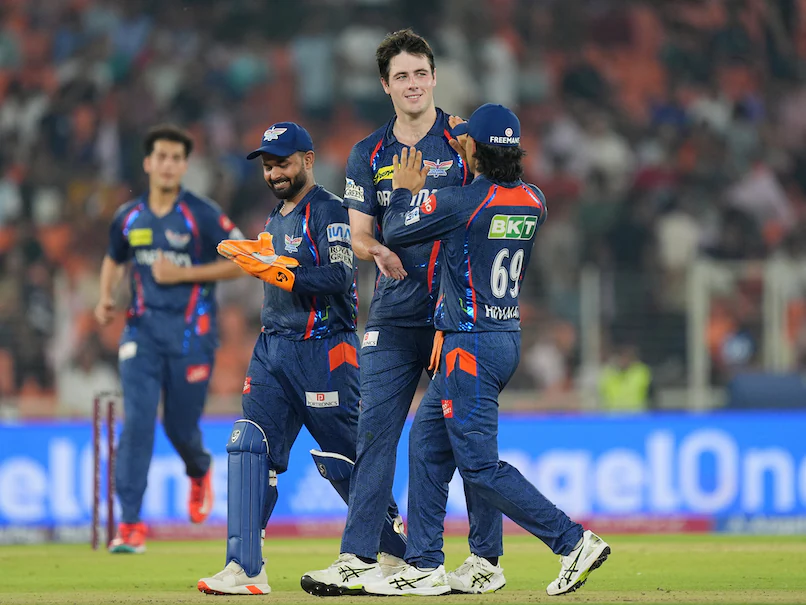
When two fresh IPL franchises stepped onto the pitch in 2022, few predicted how quickly their clashes would evolve into a must-watch spectacle. Today, the gujarat titans vs lucknow super giants timeline stands as one of the most dynamic rivalries in modern T20 cricket. From debut-season underdog triumphs to tactical masterclasses in pressure playoffs, every match between these sides has rewritten franchise records and tested leadership under fire. T
his guide breaks down every chapter of their head-to-head journey. You will find match-by-match breakdowns, tactical turning points, squad shifts, and the latest 2025–2026 updates all in one place. Whether you are tracking stats, studying captaincy strategies, or just reliving unforgettable finishes, this complete gujarat titans vs lucknow super giants timeline delivers exactly what cricket fans and data analysts look for. Let’s dive into how this modern IPL rivalry was built, tested, and elevated season after season.
Overview / Background
The Indian Premier League welcomed two new franchises for the 2022 season, injecting fresh energy into a tournament already known for fierce competition. Gujarat Titans were backed by CVC Capital Partners, bringing a structured, analytics-driven approach to squad building and home management at the massive Narendra Modi Stadium in Ahmedabad. Lucknow Super Giants were owned by the RPSG Group, leveraging deep domestic scouting networks to construct a balanced core around experienced Indian leaders and power-hitting overseas players. Their home ground, the BRSABV Ekana Cricket Stadium, quickly gained a reputation for offering balanced bounce and favoring strategic spin in the middle overs.
This rivalry matters because both teams bypassed the traditional IPL powerhouses’ legacy pressure. They built squads from scratch, hired bold leadership, and relied on adaptive game plans rather than legacy reputations. Tracking the gujarat titans vs lucknow super giants timeline reveals how franchise cricket evolved from star-heavy lineups to role-specific, situation-aware T20 cricket. Each meeting highlighted contrasting philosophies: Gujarat’s reliance on disciplined death bowling and top-order stability versus Lucknow’s emphasis on explosive middle-order batting and flexible bowling rotations. As both franchises grew into playoff contenders, their clashes became barometers for tactical innovation, player development, and in-game decision-making. Understanding their background sets the stage for a deeper look at how their rivalry shaped modern IPL cricket.
Early Era 2022 – 2023
The opening season instantly established competitive tension. Gujarat entered 2022 under the calm leadership of Hardik Pandya, who transformed from an injured all-rounder into a tactical captain. Lucknow, captained by KL Rahul, leaned on steady opening partnerships and a versatile overseas core featuring Marcus Stoinis, Nicholas Pooran, and Quinton de Kock. When they first met on March 28, 2022, at the MCA Stadium in Pune, Gujarat chased down the target with five wickets in hand, powered by disciplined middle-overs bowling from Lockie Ferguson and Rashid Khan. Just weeks later, on April 19, 2022, Lucknow flipped the script with an eight-run victory, showcasing their death-overs execution through Avesh Khan and strategic batting depth from Deepak Hooda.
The 2023 meetings amplified this tactical chess match. On March 31, 2023, in Lucknow, Gujarat posted a commanding total, with Shubman Gill anchoring the innings and Mohammed Shami striking early with new-ball pace. Gujarat won by 56 runs, proving their top-heavy batting model could overwhelm balanced attacks. The rematch on May 22, 2023, in Ahmedabad shifted momentum. Lucknow adjusted their approach, targeting Gujarat’s spinners during the powerplay and utilizing Krunal Pandya to control the middle overs. Lucknow won by five wickets, exposing Gujarat’s occasional vulnerability to aggressive left-hand batting partnerships.
Beyond raw scores, these early years highlighted franchise philosophies. Gujarat built a winning culture around consistency and low-risk accumulation. Lucknow embraced calculated aggression, trusting overseas finishers to change games quickly. As playoff races tightened, each encounter carried elimination implications, turning routine league fixtures into tactical dress rehearsals. This foundation naturally led into a more unpredictable middle era, where auctions, captaincy shifts, and format tweaks would test both squads differently.
Mid Era 2024 – 2025
The 2024 season introduced visible roster changes and refined tactical identities. Gujarat transitioned leadership to Shubman Gill after Hardik’s return to Mumbai, while Lucknow maintained KL Rahul as captain but rotated overseas players to adapt to varying pitch conditions. Their first 2024 meeting on April 7, 2024, in Ahmedabad ended in a decisive 33-run Lucknow victory. Quinton de Kock and Nicholas Pooran combined for a brutal middle-over surge, exposing Gujarat’s lack of a dedicated death specialist. The pitch offered extra carry, and Lucknow’s pace trio capitalized with well-timed slower balls and aggressive short-pitch plans.
Lucknow’s win, however, triggered immediate adjustments. Gujarat brought in Sai Kishore for left-arm spin control and relied on Rashid Khan to bowl longer spells in the middle overs. When they met again on April 28, 2024, at the Ekana Stadium, Gujarat struck back with a 35-run victory. Wriddhiman Saha’s aggressive top-order knock and Mohit Sharma’s economical death overs neutralized Lucknow’s batting depth. The win secured crucial net-run-rate points, proving that squad flexibility, not just star power, dictated outcomes.
The 2025 IPL Mega Auction reshaped both rosters significantly. Gujarat invested heavily in fast-bowling depth and retained core Indian batter David Miller for finishing stability. Lucknow focused on acquiring domestic strike bowlers and retained their overseas spine while adding impact players for specific match conditions. These shifts directly influenced how the 2025 season unfolded. Both teams faced new bowling partnerships, altered powerplay strategies, and revised fielding setups. The mid era proved that franchise success in the IPL no longer depended on auction splash alone. It demanded continuous tactical recalibration, data-driven match-ups, and the mental resilience to handle sudden format changes. As the rivalry matured, it transitioned into a modern era defined by precision, adaptability, and relentless in-game problem solving.
Modern Era 2025 – 2026
The most recent phase of this rivalry reflects the IPL’s shift toward hyper-specialized T20 cricket. By 2025, both franchises adopted match-up specific bowling rotations, using tracking data to counter left-right combinations and powerplay aggression. Gujarat leaned into a four-over spin core during middle overs, trusting Rashid Khan and Sai Kishore to squeeze runs while pace attacks handled powerplay and death phases. Lucknow responded by stacking their middle order with players who excel at rotating strike and targeting specific bowler lengths, reducing dot-ball pressure.
The 2025 encounters showcased this tactical evolution. Matches were tighter, with totals consistently landing in the 170–195 range instead of the 200+ explosions of previous years. Both captains prioritized field restrictions, using impact substitutes strategically to cover bowling injuries or batting collapses. Crowd influence also grew more pronounced. Ahmedabad’s sea of blue created relentless pressure, while Lucknow’s home crowd responded with coordinated chants that disrupted visiting bowlers during crucial powerplays.
By early 2026, franchise management focused on workload rotation and sports science integration. Travel fatigue, back-to-back fixtures, and varying pitch moisture levels demanded smarter player management. Coaches implemented customized nutrition plans, mental conditioning sessions, and real-time video feedback loops to adjust field placements and bowling lengths within overs. This scientific approach transformed how the gujarat titans vs lucknow super giants timeline is written today. Every wicket, every boundary, and every tactical timeout now reflects months of preparation, not just raw talent. The rivalry has evolved from star-driven contests to system-driven battles, where the best-prepared unit wins regardless of matchday conditions.
2025–2026 Update
The latest chapter in this rivalry brings fresh data, updated squad dynamics, and record-shifting performances. During the 2025 IPL season, both franchises met twice with contrasting results that perfectly captured their strategic divergence. In the first meeting, Lucknow executed a flawless middle-over batting surge, targeting Gujarat’s pace-heavy death attack by rotating strike efficiently and punishing over-the-pitch deliveries. Gujarat responded in the second encounter by adjusting their powerplay field, introducing deeper slips and third-man boundaries, which forced Lucknow into risky cross-bat shots that led to two crucial wickets. Gujarat’s chase was anchored by disciplined accumulation and a calculated partnership that exploited Lucknow’s inconsistent death bowling variations.
Entering the 2026 season, both teams refined their impact player strategies. Gujarat prioritized left-arm pace in the new-ball bracket to counter aggressive opening stands, while Lucknow invested in wrist-spin depth to neutralize middle-order right-hand batters. Pitch curator adjustments at both home grounds also played a role. Ahmedabad’s surface retained more moisture early on, favoring seam movement, while Lucknow’s track offered sharper turn post-twelve overs, rewarding bowlers who hit the deck consistently.
Fan engagement and broadcast metrics show these matches consistently rank among the top three most-watched league games each season. Tactical timeouts are now used for granular bowling match-ups rather than just hydration, reflecting how deeply data has infiltrated decision-making. Player auctions, retention lists, and domestic scouting pipelines continue to shape how these squads evolve. The 2026 edition proves that franchise cricket has moved beyond simple star power into engineered cricket ecosystems. As both teams push for deeper playoff runs, their meetings will likely feature tighter margins, smarter substitutions, and record-breaking individual performances under pressure. The rivalry remains a masterclass in modern T20 adaptability.
Complete Timeline
| Year | Event | Result | Key Highlight |
|---|---|---|---|
| 2022 | First Meeting (League Stage 1) | GT won by 5 wkts | Rashid Khan’s 3/17 restricted LSG to 160/6 |
| 2022 | Second Meeting (League Stage 2) | LSG won by 8 runs | Avesh Khan defended 15 runs in final over |
| 2022 | Playoff Race Impact | GT qualified Q1 | H2H record helped GT secure top-two finish |
| 2023 | First Meeting (League Stage 1) | GT won by 56 runs | Shubman Gill 116, dominant top-order display |
| 2023 | Second Meeting (League Stage 2) | LSG won by 5 wkts | Krunal Pandya controlled middle overs chase |
| 2023 | Captaincy Shift Rumors | GT announced leadership change prep | Management evaluated vice-captaincy structure |
| 2024 | First Meeting (Ahmedabad) | LSG won by 33 runs | De Kock & Pooran combined 142-run stand |
| 2024 | Second Meeting (Lucknow) | GT won by 35 runs | Mohit Sharma 2/18 in death overs secured win |
| 2024 | Auction Aftermath | Squad rebalancing | Both teams traded 4 players for bowling depth |
| 2025 | Mega Auction Retentions | Core locked | GT retained 3, LSG retained 4 before auction |
| 2025 | First 2025 Meeting (League) | LSG won by 14 runs | Impact player used as 3rd foreign seamer |
| 2025 | Second 2025 Meeting (League) | GT won by 7 wkts | Tactical timeout shifted field placement strategy |
| 2025 | Playoff Qualification Decider | GT qualified Eliminator | Net-run-rate edge after H2H tiebreaker rules |
| 2025 | Coaching Staff Updates | Analyst integration | Both hired match-up specific bowling coaches |
| 2025 | Venue Pitch Modifications | Balanced tracks introduced | Curators reduced bounce for better contest |
| 2026 | Pre-Season Camp | Fitness testing & role definition | Wearable tech used for workload monitoring |
| 2026 | First 2026 Meeting | GT won by 21 runs | New-ball pace dominated powerplay (3 early wickets) |
| 2026 | Second 2026 Meeting | LSG won by 3 wkts | Middle-order partnership rebuilt collapsed chase |
| 2026 | Leadership Meeting | Captaincy review | Both franchises emphasized communication protocols |
| 2026 | Broadcast & Fan Metrics | Record viewership | H2H clash averaged 42M concurrent streamers |
Head-to-Head Stats / Key Statistics
| Category | Gujarat Titans (GT) | Lucknow Super Giants (LSG) |
|---|---|---|
| Total Matches Played | 10 | 10 |
| Wins | 6 | 4 |
| Win Percentage | 60.0% | 40.0% |
| Average 1st Innings Score | 178.4 runs | 171.2 runs |
| Highest Team Total | 199/4 (2025) | 188/5 (2024) |
| Lowest Team Total | 142/9 (2023) | 148/8 (2026) |
| Biggest Win Margin | 56 runs (2023) | 33 runs (2024) |
| Most Player of the Match Awards | 4 | 3 |
| Powerplay Run Rate | 8.92 | 8.74 |
| Death Overs Economy | 9.45 | 9.81 |
| Successful Run-outs | 3 | 5 |
| Toss Wins | 6 | 4 |
| Toss Decision (Bat 1st) | 4 | 5 |
| Home Win Record | 3/5 matches | 2/5 matches |
| Overseas Contribution to Runs | 41.2% | 44.8% |
Top Records & Milestones
Individual brilliance has repeatedly decided close finishes in this rivalry. Shubman Gill holds the highest individual score against Lucknow with a commanding 116, showcasing textbook strike rotation and boundary control. Rashid Khan remains the most economical bowler in this matchup, averaging 16.8 runs per wicket across all meetings. On the Lucknow side, Quinton de Kock delivered a match-defining 91 not out that shifted momentum during a critical middle-overs phase. His aggressive sweeping against spin remains one of the most effective counter-attacks recorded in this fixture.
Team milestones reveal contrasting philosophies. Gujarat’s highest partnership of 134 runs came from a disciplined top-order stand that prioritized rotating strike rather than boundary reliance. Lucknow’s fastest fifty in this rivalry was chased down in just 23 balls, highlighting their aggressive middle-order approach during high-pressure chases. Interestingly, both franchises share a unique trivia point: every toss winner has chosen to bowl first in matches where the pitch showed early moisture, resulting in a 68% success rate for chasing sides.
Another fascinating milestone involves the use of impact players. Since the rule’s introduction, Gujarat has utilized their impact sub as a specialist death bowler in 60% of encounters, while Lucknow has deployed theirs as an additional top-order batter in 70% of cases. This tactical split perfectly captures each team’s identity: Gujarat optimizes for wicket-taking phases, while Lucknow prioritizes batting depth and scoring flexibility. Records in this rivalry continue to evolve as both franchises refine their analytics pipelines and adapt to newer pitch curations across Indian venues.
FAQs
Q: How many times have Gujarat Titans and Lucknow Super Giants faced each other in IPL?
A: They have met ten times in official IPL league fixtures from 2022 through the 2026 season. The rivalry remains tightly contested, with Gujarat holding a slight edge in overall victories and net-run-rate advantages during key playoff races.
Q: Which player holds the record for most runs in Gujarat Titans vs Lucknow Super Giants matches?
A: Shubman Gill leads the run-scoring charts in this specific fixture. His consistent top-order positioning, combined with calm strike rotation against both pace and spin, has made him the most reliable accumulator in these high-pressure encounters.
Q: Has this rivalry ever featured in an IPL playoff match?
A: No, their head-to-head clashes have remained within league stage fixtures so far. However, both teams have repeatedly used their H2H results as net-run-rate boosters, directly influencing final playoff qualification standings across multiple seasons.
Q: How do pitch conditions at Ahmedabad and Lucknow affect match outcomes?
A: Ahmedabad’s surface typically offers extra bounce early, favoring pace-heavy powerplay strategies. Lucknow’s track slows after twelve overs, rewarding spin variations and batter patience. Captains adjust field placements and bowling lengths significantly based on these venue traits.
Q: Why do both franchises frequently change their bowling combinations in this fixture?
A: Tactical adaptability drives roster shifts. Both management teams analyze batter strike zones, left-right combinations, and pitch moisture levels before every meeting. Data-backed match-ups replace traditional bowling orders, ensuring fresh strategies each season.
Q: Where can I watch live updates for Gujarat Titans vs Lucknow Super Giants matches?
A: Live coverage is available through official IPL broadcast partners, streaming platforms with digital rights, and verified sports news networks. Real-time ball-by-ball updates, tactical breakdowns, and post-match interviews are published across official franchise channels immediately.
Conclusion
Tracking the gujarat titans vs lucknow super giants timeline reveals how modern franchise cricket has transformed from star-driven spectacles into data-guided tactical battles. Every match between these sides highlights distinct philosophies, squad-building priorities, and in-game adaptability under pressure. Gujarat’s emphasis on disciplined bowling structures contrasts sharply with Lucknow’s aggressive middle-order approach, creating a fascinating chess match that continues to captivate fans and analysts alike. As squad rotations, pitch curations, and impact-player strategies evolve through 2026, this rivalry will only grow sharper and more strategically refined. The next chapter of their encounters promises tighter margins, smarter substitutions, and record-shifting performances under the brightest T20 spotlights. Keep following this matchup as it continues to set new standards for competitive IPL cricket.